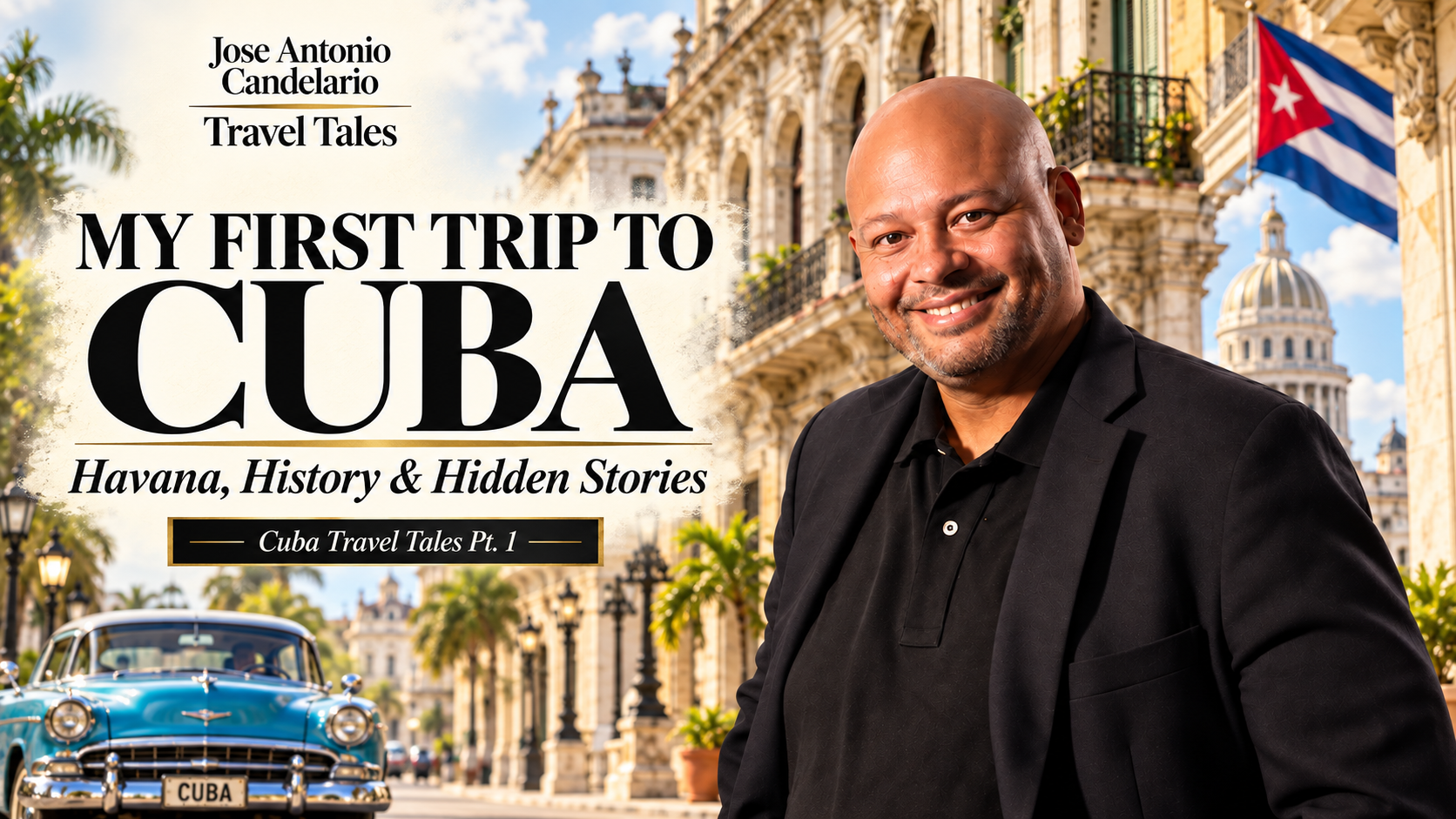
What began as a trip driven by curiosity about revolution became something much more personal—a journey into the people, history, culture, and everyday life on the island.
In 2017, I decided I was going to Havana.
It wasn’t a casual decision. The island had occupied a place in my imagination for years. Like a lot of people, much of what I knew about the island had been shaped by stories of revolution, political struggle, Che Guevara, Fidel Castro, and decades of tension between the island and the United States.
I wanted to see the country for myself.
More importantly, I wanted to photograph it for myself.
By that point in my life, international travel wasn’t new to me. I had trekked through Costa Rica, traveled to Peru and Machu Picchu, stood before the pyramids of Egypt, and visited Paris with my family. I had already learned one of the most important lessons of travel: you can prepare as much as possible, but the destination will almost always teach you something you didn’t expect.
This journey would prove that lesson again.
Getting to Havana
My journey took me through Canada before continuing on to Havana.
Before leaving home, I had arranged accommodations in Havana for both the beginning and the end of the trip. That was something I had learned from previous travels: give yourself a dependable place to land when you arrive and a dependable place to return to before you leave.
Everything in between could be an adventure.
And that was exactly what I wanted.
I wasn’t traveling with a large tour group. I wanted to move through the country, meet people, photograph what I encountered, and discover the island beyond the images I had already seen countless times.
I arrived carrying cameras, photography experience, curiosity, and probably more confidence than common sense.
But sometimes that’s how journeys begin.
The Island I Expected—and the Island I Found
When I first arrived, I was fascinated by the island’s revolutionary history.
As a younger man, the idea of revolution had always been compelling to me—the idea of people challenging an established system and fighting for change. I wanted to understand what had happened there and how those events continued to shape the country.
But almost immediately, the island began pushing me beyond that narrow perspective.
The country wasn’t simply a story about revolution.
It was a story about people.
It was Caribbean.
It was Antillean.
It was familiar in ways I hadn’t expected.
The heat, the sun, the resourcefulness, the relationships between neighbors, the architecture, the rhythms of daily life, and the lingering effects of colonial history all connected the island to a much larger Caribbean experience.
The more time I spent there, the less interested I became in reducing the island to political symbols.
I became interested in the people I met.
That shift would eventually become one of the most important lessons of the entire journey.
The Woman Who Opened Her Library to Me
My first Airbnb host in Havana was a retired educator and schoolteacher.
I couldn’t have planned a better introduction to the country.
She was intelligent, welcoming, opinionated, and willing to talk.
One of the stories she shared with me reached back to the years before the 1959 revolution. She told me that she and friends had once been detained during the Batista era. According to her account, an uncle with connections to the government intervened and helped secure her release.
Two friends who had been with her disappeared.
She told me she never saw them again.
I remember listening to her because suddenly history wasn’t something printed in a book.
Someone sitting across from me had lived through it.
Whether traveling with a camera or simply traveling to learn, moments like that are priceless. You begin to understand that history is not composed only of presidents, revolutionaries, armies, and governments.
History also belongs to ordinary people who lived through extraordinary circumstances.
My host then opened another door for me—almost literally.
She showed me her library.
There were books everywhere, and she encouraged me to read and learn. Through our conversations and those books, I began trying to understand the island beyond the familiar faces and revolutionary imagery that had been exported around the world.
I had arrived wanting to photograph a revolution.
I was beginning to realize that I needed to photograph a people.
Discovering the Size of the Island
Another lesson arrived quickly: the island is big.
Looking at the island on a map doesn’t always prepare you for the distances involved.
I wanted to travel across the country rather than stay only in Havana. My planned route included places such as Santa Clara, Santiago, Baracoa, Trinidad, Viñales, and other communities along the way.
That meant figuring things out one trip at a time.
I didn’t have the entire journey rigidly scheduled.
I would arrive somewhere, learn, photograph, talk to people, and then arrange the next leg.
That style of traveling gives you something a perfectly scheduled itinerary cannot: room for the destination to change your plans.
And the island changed mine repeatedly.
The Places You Skip Become Part of the Story Too
Camagüey had originally been part of my plan.
During conversations in Havana, however, I was advised to reconsider it based on what I was searching for at that particular stage of the journey.
So I skipped it.
That doesn’t mean Camagüey lacked history or importance. In fact, the stories I heard about the city’s traditions, clay vessels, water storage, and local ingenuity fascinated me.
But travel forces choices.
Every place you visit means another place you don’t.
Every photograph you take means another moment passes undocumented.
That’s part of being a traveler and part of being a photographer.
You learn to accept that you will never capture everything.
From Havana to Santa Clara
Eventually, it was time to leave Havana.
My next destination was Santa Clara.
And that was when another part of the journey began.
By this point, something had already changed in me.
I wasn’t simply looking for monuments or symbols anymore.
I was watching people.
I was paying attention to transportation, architecture, neighborhoods, conversations, weather, routines, and the small details that tell you what daily life actually feels like.
Those are often the photographs that stay with me.
Not necessarily the famous landmark.
Not necessarily the postcard.
Sometimes it is a horse and buggy being used as everyday transportation.
Sometimes it is someone standing beneath the midday sun.
Sometimes it is an old automobile kept alive through ingenuity and necessity.
Sometimes it is simply a building, a street, a face, or a color that makes you stop.
Those moments became the memories I brought home.
The Journey Was Becoming the Story
Photography has taught me that you sometimes begin with one subject and discover another.
I traveled to Havana thinking I understood what I wanted to photograph.
I didn’t.
What interested me at the beginning of the trip was not what interested me by the end.
That’s one reason I’ve returned to these photographs years later.
I’m not simply looking at images.
I’m remembering conversations.
I’m remembering people.
I’m remembering what I thought before I arrived and what I understood differently when I left.
That’s what Travel Tales is really about.
The photograph is only the beginning.
There is always a story outside the frame.
And this one was just getting started.
Next: Santa Clara
From Havana, I traveled to Santa Clara, where the next chapter of my island journey began.
That’s a story for Antilles Travel Tales, Part 2.
Tell a friend to tell a friend. The journey continues.